
You’re touring a charming home with a beautiful back deck overlooking the yard. The deck looks solid, the railings seem sturdy, and you’re already imagining summer barbecues and morning coffee out there. Your home inspector spends twenty minutes examining it closely—checking underneath, testing railings, measuring gaps, and taking notes. You’re thinking, “It’s just a deck. What could be wrong?”
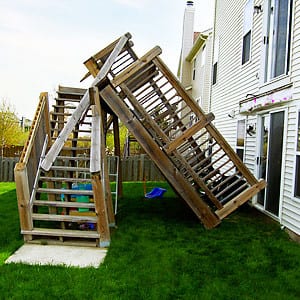
The answer: potentially a lot. Decks and porches are among the most dangerous features of residential properties, responsible for thousands of injuries annually in the United States. They’re also among the most commonly deficient components I find during Winchester home inspections.
Why Decks Are Dangerous
Decks seem simple, but they’re complex structural systems that must safely support significant weight while exposed to Virginia’s harsh weather—snow, ice, rain, heat, and humidity—all degrading materials over time.
The statistics are sobering:
- Approximately 40,000 deck-related injuries occur annually in the U.S.
- Deck collapses kill several people each year
- Most failures result from connection failures or deteriorated structural components
Common failure scenarios:
- Ledger board pulling away from house (catastrophic collapse)
- Support posts rotted at ground level giving way under load
- Floor joists weakened by rot failing suddenly
- Inadequate railings breaking when someone leans against them
- Poorly built stairs collapsing
Winchester’s housing stock includes many older decks built before modern codes, DIY decks constructed without permits, and aging decks lacking proper maintenance. Any of these can be dangerous.
The Ledger Board: Most Critical Component
The ledger board is the horizontal board bolted to your house supporting one side of the deck. Ledger failure is the primary cause of catastrophic deck collapses.
What inspectors examine:
Attachment method— Proper ledgers require:
- Lag screws or through-bolts (never nails alone)
- Proper spacing (typically 16 inches on center)
- Bolts installed through solid house framing, not just siding
Flashing— Critical waterproofing:
- Metal flashing above ledger directing water away
- Proper integration with house weather barrier
- No gaps allowing water behind ledger
Material condition:
- No rot, decay, or water damage
- Solid house framing behind ledger
- No evidence of movement or previous failure
Common problems:
- Ledgers attached with nails (fails under load)
- Bolts through siding only, not solid framing
- Missing flashing causing rot
- Insufficient bolt spacing
Support Posts and Footings
Posts transfer deck load to the ground. Both posts and foundations must be adequate.
Post evaluation:
Proper installation requires:
- Correctly sized posts (usually 6×6)
- Pressure-treated lumber rated for ground contact
- Posts elevated on hardware, not sitting in concrete (moisture causes rot)
- Secure connections to footings and deck frame
Footing requirements:
- Below frost line (typically 30 inches deep in Winchester)
- Adequate diameter (usually 12 inches minimum)
- No cracking, settling, or deterioration
Common problems:
- Posts sitting directly on ground or pavers (rot inevitable)
- Footings too shallow—frost heave causes structural failure
- Deteriorated posts at ground level (often hidden by deck boards)
- Missing post-to-footing connections
Joists, Beams, and Decking
Floor joists span between ledger and beam, supporting deck boards. Beams span between posts.
What inspectors check:
Joist inspection:
- Proper size and spacing for span
- No excessive deflection or sagging
- No rot, particularly where joists rest on beams
- Joist hangers properly sized with all nails present (missing nails are shockingly common)
Beam inspection:
- Adequate size for span and load
- Proper post-to-beam connections using code-compliant hardware
- No excessive sagging
Decking surface:
- No excessive rot or splitting
- Boards securely fastened
- Proper spacing for drainage
- No trip hazards from raised fasteners or warping
Railings: Preventing Falls
Railings prevent falls from elevated decks. Code requirements are specific and critical.
Railing height:
- Decks over 30 inches above grade require guardrails
- Minimum 36 inches high (42 inches in some jurisdictions)
- Measured from deck surface to top of rail
Baluster spacing:
- Gaps cannot exceed 4 inches (sphere test—4-inch ball can’t pass through)
- Applies to all openings including between bottom rail and deck
Railing strength:
- Must resist 200 pounds of horizontal force
- Posts securely attached with through-bolts or lag screws (not nails)
- No wobbling or looseness
Stair handrails:
- Required on stairs with 4+ risers
- Height: 34-38 inches above stair nosing
- Graspable profile (1.5-2 inches diameter)
Common problems:
- Railings 34-35 inches (close but not compliant)
- Baluster spacing 5-6 inches (old code, not current)
- Wobbly railings indicating inadequate connections
- Posts attached with inadequate fasteners
- Missing handrails on stairs
Stairs: Frequent Accident Sites
Deck stairs require careful evaluation due to frequent accidents.
Critical requirements:
Riser and tread dimensions:
- Maximum riser height: 7.75 inches
- Minimum tread depth: 10 inches
- Most critical: Riser height variation cannot exceed 3/8 inch
Why this matters: Your feet expect consistent step heights. Even small variations cause tripping.
Structural requirements:
- Properly sized stringers (structural supports)
- Secure top and bottom connections
- No excessive bounce
- Bottom not sitting on ground (causes rot)
Landing requirements:
- Minimum 36 inches deep at top of stairs
- No door swinging over stairs
Common problems:
- Bottom or top riser different height (extremely dangerous)
- Inadequate or rotted stringers
- Stairs settling away from deck
- Missing adequate landings
Materials and Decay
Winchester’s climate accelerates deck deterioration. Inspectors look for:
Wood rot indicators:
- Soft, spongy wood when probed
- Discoloration indicating moisture
- Fungal growth
- Crumbling or breaking wood
Critical decay locations:
- Post bases at ground contact
- Joist ends resting on beams
- Ledger board and house rim joist
- Stair stringers near ground
- Any horizontal water-collecting surfaces
Insect damage:
- Carpenter ant frass (sawdust)
- Termite mud tubes
- Powder post beetle holes
Note on composite decks: Composite boards don’t rot, but structural lumber underneath—posts, joists, beams—still does. Don’t assume composite decks are maintenance-free.
Common Winchester-Area Deck Issues
DIY Decks: Many owner-built decks lack proper ledger attachment, use undersized structural members, have code-violating railings, or inadequate footings.
Aging 1990s-2000s Decks: Decks from this era are reaching end-of-life with deteriorating pressure treatment, corroded fasteners, and general wear from 20-30 years exposure.
Historic Home Additions: Decks added to older Winchester homes often attach to deteriorated framing using questionable methods.
What to Do When Issues Are Found
Evaluate severity:
Immediate safety hazards (address before closing):
- Inadequate ledger attachment
- Severely deteriorated structural members
- Broken railings
- Dangerous stairs
Significant concerns (negotiate repairs):
- Missing flashing
- Rotted posts or joists
- Railing violations
- Deteriorated stairs
Get professional estimates:
Typical repair costs:
- Ledger re-attachment: $800-$2,500
- Post replacement: $200-$500 per post
- Joist repair: $500-$2,000
- Railing replacement: $20-$40 per linear foot
- Stair rebuild: $800-$2,500
- Complete deck replacement: $15-$35 per square foot
Negotiation strategies:
- Request repairs (seller fixes before closing)
- Request credits (you control quality and timing)
- Walk away (if unsafe and seller won’t address)
When to Call a Structural Engineer
Get professional engineering evaluation if inspection reveals:
- Significant ledger deterioration or movement
- Multiple rotted posts
- Severe structural sagging
- Evidence of previous collapse
- Complex multi-level deck concerns
Bottom Line
Decks hide complex structural and safety considerations. What looks acceptable may be structurally dangerous, and what seems sturdy may have hidden decay ready to fail.
When your Winchester home inspector examines the deck thoroughly, appreciate the diligence. Those twenty minutes could prevent injuries to your family—or save you from discovering a $15,000 deck replacement after you’ve bought the home.
Never dismiss deck safety concerns. These structures support people you love and must be safe, code-compliant, and properly maintained.