
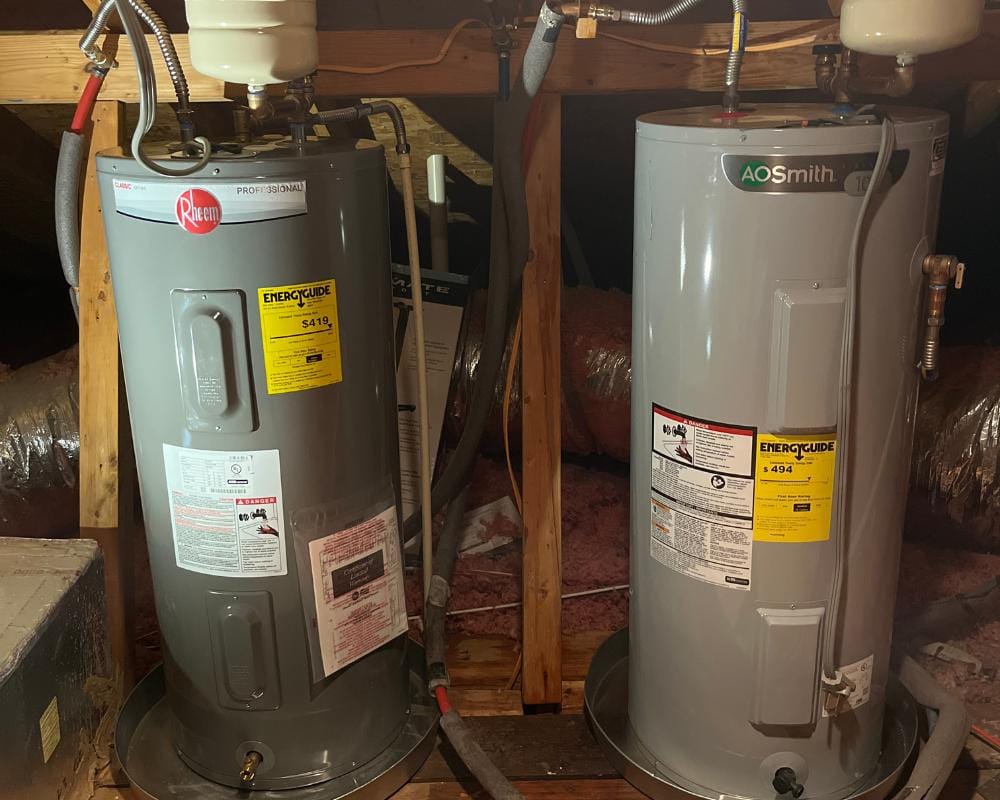
Your water heater is one of the hardest-working appliances in your home, yet most homeowners never think about it—until they’re standing in a cold shower or mopping up water from a failed tank. Understanding your water heater, knowing what to look for during inspections, and performing basic maintenance can prevent emergencies and extend the life of this essential appliance.
What Home Inspectors Check on Water Heaters
During a professional home inspection in Winchester or the surrounding tri-state area, your water heater receives a thorough evaluation. Here’s what we examine:
Age and Type:
- Manufacturing date (critical for predicting remaining lifespan)
- Tank or tankless system
- Gas, electric, or hybrid/heat pump model
- Capacity (gallons) and whether it’s appropriate for household size
Safety Components:
- Temperature and pressure relief (TPR) valve
- Proper TPR discharge pipe routing
- Gas shut-off valve location and accessibility (gas units)
- Electrical disconnects (electric units)
- Adequate combustion air supply (gas units)
- Carbon monoxide levels near gas water heaters
Installation Quality:
- Proper clearances around unit
- Secure mounting (especially in earthquake-prone or flood-prone areas)
- Approved venting materials and configuration (gas units)
- Expansion tank installation (required in many areas)
- Correct pipe materials and connections
- Drain pan installation (when required)
Operational Concerns:
- Signs of leaks or moisture
- Rust or corrosion on tank or connections
- Proper temperature setting (120°F recommended)
- Adequate hot water production
- Unusual noises during operation
- Sediment buildup indicators
Code Compliance:
- Current electrical or gas code requirements
- Proper bonding and grounding
- Required seismic strapping (in applicable areas)
- Adequate ventilation
Understanding Water Heater Lifespan
Conventional Tank Water Heaters: 8-12 years average lifespan. After 10 years, failure risk increases significantly. Check the serial number to determine age—most manufacturers encode the date in the first four digits (month and year).
Tankless Water Heaters: 15-20 years with proper maintenance. More expensive upfront but longer-lasting and more energy-efficient.
Heat Pump Water Heaters: 10-15 years. These hybrid units are highly efficient but require more maintenance.
If your Winchester home has a water heater approaching or exceeding these ages, start planning for replacement. Proactive replacement prevents emergency situations and water damage.
Common Water Heater Problems in Winchester Homes
Sediment Buildup: Winchester’s water, especially from well systems common in Frederick County and surrounding areas, often contains minerals that settle at the bottom of tank water heaters. This sediment:
- Reduces efficiency and increases energy costs
- Causes rumbling or popping noises
- Accelerates tank corrosion
- Decreases hot water capacity
Anode Rod Depletion: Your water heater has a sacrificial anode rod that prevents tank corrosion. Once depleted (typically after 3-5 years), the tank itself begins corroding. Most homeowners never replace anode rods, which is why tanks fail prematurely.
TPR Valve Issues: The temperature and pressure relief valve is a critical safety device that prevents tank explosions. Common problems include:
- Valves that have never been tested and are now seized
- Missing or improper discharge pipes
- Leaking valves that need replacement
- Discharge pipes terminating in unsafe locations
Inadequate Venting: Gas water heaters in older Winchester homes sometimes have outdated venting that doesn’t meet current codes. Improper venting can cause carbon monoxide to enter your home—a deadly situation.
Leaking Tanks: Once a tank starts leaking, it cannot be repaired. Replacement is the only option. Small leaks become major floods, potentially causing thousands in water damage.
Essential Water Heater Maintenance
Flush the Tank Annually: Draining several gallons from the tank removes sediment buildup. This simple maintenance extends tank life and improves efficiency. In areas with hard water (common in our region), flush twice yearly.
Test the TPR Valve: Once a year, lift the TPR valve lever briefly to ensure it operates freely. Water should discharge and stop when you release the lever. If it doesn’t work or continues leaking, replace it immediately.
Check the Anode Rod: Every 3-5 years, have the anode rod inspected. Replacement costs $100-$200 and can add years to your water heater’s life.
Maintain Proper Temperature: Set your water heater to 120°F. Higher temperatures waste energy and increase scalding risk. Lower temperatures may not adequately kill bacteria.
Insulate Older Units: Adding an insulation blanket to older water heaters reduces heat loss and lowers energy bills. Never cover the thermostat, TPR valve, or combustion air openings.
Clear the Area: Keep combustibles away from gas water heaters. Don’t use the area as storage. Ensure adequate clearance for maintenance and safety.
Tank vs. Tankless: What Winchester Homeowners Should Consider
Conventional Tank Water Heaters:
- Lower upfront cost ($800-$1,500 installed)
- Familiar technology and easier repairs
- Adequate for most households
- Takes up more space
- Standby energy losses (keeping 40-50 gallons hot 24/7)
- Risk of catastrophic tank failure and flooding
Tankless Water Heaters:
- Higher upfront cost ($2,000-$4,500 installed)
- Unlimited hot water supply (when properly sized)
- 20-30% more energy efficient
- Compact wall-mounted design
- Longer lifespan (15-20 years)
- Requires larger gas lines or significant electrical service
- May struggle during simultaneous high-demand situations
- Annual maintenance is essential
For Winchester homes, consider your water source (well water requires more tankless maintenance), household size, and budget when choosing.
Signs You Need a New Water Heater
Replace immediately if:
- The tank is leaking
- The unit is 12+ years old with declining performance
- You see significant rust or corrosion
- You’re experiencing frequent pilot light failures (gas units)
- There’s insufficient hot water despite proper settings
Plan replacement soon if:
- Age is 8-10 years
- You hear rumbling or banging noises
- Water is rusty or discolored
- Energy bills have increased unexpectedly
- You’re doing major renovations (good time to upgrade)
Water Heater Emergencies
If your water heater is leaking:
- Turn off water supply (valve on cold water line entering top of heater)
- Turn off power (electric) or gas (gas units)
- Drain the tank if possible to minimize water damage
- Call a plumber immediately
If you smell gas near your water heater:
- Don’t touch any electrical switches
- Evacuate immediately
- Call the gas company and fire department from outside
- Do not re-enter until authorities declare it safe
The Bottom Line
Your water heater works quietly in your basement, crawl space, or utility closet, providing hot water for showers, dishes, laundry, and cleaning. A little knowledge and basic maintenance prevent emergencies, extend equipment life, and save money.
During home inspections throughout Winchester, Stephens City, Middletown, and the surrounding Shenandoah Valley, water heater issues are among the most common—and most preventable—problems I encounter. Don’t wait for cold showers or flooded floors to pay attention to this hardworking appliance.
Need a professional water heater inspection in Winchester, VA? Trefoil Home Inspections provides thorough evaluations of water heaters and all major home systems throughout the tri-state area.