
When most Winchester homeowners think about electrical safety, GFCI outlets come to mind—those outlets with “test” and “reset” buttons in bathrooms and kitchens that protect against electrocution. But there’s another critical electrical safety device that’s been required in bedrooms since 1999, yet remains virtually unknown to homeowners: the AFCI outlet.
If you’ve purchased a newer home in Winchester or had electrical work done recently, you likely have AFCI protection and don’t even know it. And if you live in an older home, understanding AFCIs might prevent your house from burning down.
What Is an AFCI?
AFCI stands for Arc Fault Circuit Interruptor. While that sounds technical, the concept is straightforward: AFCIs detect dangerous electrical arcing and shut off power before fires start.
Electrical arcing occurs when electricity jumps across a gap in damaged wiring, creating intense heat and sparks—the same principle as a welder’s torch or lightning. In your walls, arcing can ignite surrounding insulation, wood framing, and other combustible materials, starting house fires.
Unlike normal circuit breakers that only trip when circuits are overloaded, AFCIs constantly monitor electrical current patterns, detecting the distinctive “signature” of dangerous arcing and shutting off power in milliseconds.
AFCI vs. GFCI: What’s the Difference?
Both are safety devices, but they protect against different hazards:
GFCI (Ground Fault Circuit Interruptor):
- Protects: People from electrocution
- How: Detects current imbalances indicating electricity is escaping through an unintended path (like through your body to ground)
- Required locations: Bathrooms, kitchens, garages, outdoor outlets, basements, crawl spaces—anywhere water and electricity coexist
- Recognizable: Outlets with “test” and “reset” buttons
AFCI (Arc Fault Circuit Interruptor):
- Protects: Your home from electrical fires
- How: Detects dangerous arcing in damaged or deteriorating wiring
- Required locations: Bedrooms, living rooms, dining rooms, family rooms, hallways, closets—essentially all living spaces
- Recognizable: May look like standard outlets, or protection may be at the breaker panel (AFCI breakers)
Key distinction: GFCIs prevent you from being electrocuted. AFCIs prevent your house from burning down.
Why AFCIs Matter: The Fire Statistics
According to the U.S. Fire Administration and National Fire Protection Association:
- Electrical failures cause approximately 24,000 residential fires annually
- These fires result in 280 deaths and over $800 million in property damage yearly
- Arc faults account for a significant portion of these fires
- Many electrical fires start in walls where homeowners can’t see the problem until it’s too late
Arc faults develop from:
- Damaged wire insulation from age, pests, or nails/screws
- Loose electrical connections
- Overheated wiring
- Deteriorating extension cords or appliance cords
- Amateur electrical work creating hazards
- Normal wire aging in older homes
Winchester’s housing stock includes many homes built before modern electrical codes. Older homes with original wiring are particularly vulnerable to arc fault fires as insulation degrades and connections loosen over decades.
When AFCIs Became Required
The National Electrical Code (NEC) has expanded AFCI requirements over time:
1999: AFCIs first required in bedroom circuits only 2002: Requirements expanded to all bedroom outlets and lighting 2008: Extended to family rooms, dining rooms, living rooms, parlors, libraries, dens, bedrooms, sunrooms, recreation rooms, closets, hallways, and similar rooms 2014: Requirements expanded further to include kitchens and laundry areas 2020: Nearly all branch circuits in dwelling units now require AFCI protection
Virginia generally adopts NEC updates within 1-3 years, meaning Winchester homes built or renovated since the early 2000s should have AFCI protection in bedrooms at minimum, with newer homes (post-2010) having much broader coverage.
How to Tell If You Have AFCI Protection
AFCIs come in two main forms:
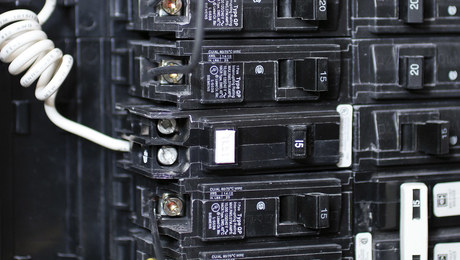
AFCI Circuit Breakers: The most common installation. Located in your main electrical panel, AFCI breakers look similar to standard breakers but have a “test” button. Open your electrical panel and look for breakers labeled “AFCI” or with test buttons. Breakers protecting bedrooms, living rooms, and other required areas should be AFCI breakers in homes built or rewired since the early 2000s.
AFCI Outlets: Less common but increasingly used. These look similar to GFCI outlets with test and reset buttons, but they’re labeled “AFCI” instead. One AFCI outlet at the beginning of a circuit can protect all downstream outlets on that circuit.
Combination AFCI/GFCI Devices: Newer technology combines both protections in one device—useful in locations like kitchens where both are required.
If you’re unsure whether you have AFCI protection, check:
- Your electrical panel for AFCI breakers
- Outlet labels in bedrooms and living spaces
- Permit records if you’ve had electrical work done
- Your home inspection report if you had one
What Happens When an AFCI Trips?
AFCI devices trip (shut off power) when they detect dangerous arcing. This might happen because:
Legitimate Arc Fault Detection:
- Damaged wire in the wall
- Loose connection in an outlet or switch
- Degraded appliance cord
- Actual electrical problem requiring repair
Nuisance Tripping: Early AFCI technology sometimes tripped unnecessarily from:
- Certain vacuum cleaners or power tools creating normal, harmless arcs
- Dimmer switches
- Treadmills or exercise equipment
- Hair dryers or other motor-driven appliances
Newer AFCI devices (manufactured after 2008) are significantly better at distinguishing dangerous arcs from normal operational arcs, reducing nuisance tripping.
If your AFCI trips:
- Unplug everything on that circuit
- Reset the AFCI (press “reset” button or flip breaker off then on)
- Plug devices back in one at a time to identify the problem
- If it trips immediately with nothing plugged in, call an electrician—you have a wiring problem
- If it trips with a specific device, that device may have a problem
- If it trips repeatedly without obvious cause, call an electrician for evaluation
Never ignore repeated AFCI trips. They’re detecting something, even if you can’t see it.
Common AFCI Issues Found During Home Inspections
As a Winchester home inspector, I regularly encounter AFCI-related issues:
Missing AFCI Protection: Homes built or renovated after AFCI requirements became effective but lacking proper protection. This is a code violation and safety concern requiring correction.
Non-Functional AFCIs: Devices installed but not working properly. Testing AFCIs during inspections sometimes reveals they don’t trip when they should—a dangerous false sense of security.
Incorrect Installation: AFCIs installed where not required while required locations lack protection. For example, bathroom circuits (requiring GFCI) mistakenly have AFCI instead, while bedroom circuits (requiring AFCI) have standard breakers.
Older AFCI Technology: First-generation AFCI breakers from early 2000s that should be upgraded to modern combination-type AFCIs providing broader protection.
Amateur Electrical Work: DIY electrical additions bypassing AFCI protection or installed incorrectly, creating hazards the AFCI should prevent.
Should You Add AFCI Protection to an Older Home?
If your Winchester home was built before AFCI requirements and hasn’t been updated, should you add AFCI protection?
Codes don’t require retrofitting existing homes unless you’re doing electrical renovations. However, adding AFCI protection is smart safety investment, especially if:
Your home has aluminum wiring: Homes built 1965-1973 often have aluminum wiring prone to connection failures and arcing. AFCIs provide crucial backup protection.
You have knob-and-tube wiring: Historic Winchester homes with original knob-and-tube wiring face higher arc fault risks as insulation deteriorates. While complete rewiring is ideal, AFCIs offer interim protection.
You’re planning to stay long-term: Protecting your family and home investment justifies the cost.
You’re doing any electrical work: When you open electrical panels for any reason, upgrading to AFCI breakers adds minimal additional cost.
You have older children or teenagers: Bedrooms with multiple devices, chargers, and electronics create higher electrical loads and arc fault risks.
Your home has experienced electrical issues: Flickering lights, frequent breaker trips, or burning smells all suggest wiring problems that AFCIs can help protect against.
Cost to Add AFCI Protection
Adding AFCI protection is relatively affordable:
AFCI Circuit Breakers: $40-$60 per breaker (materials only) Professional installation: $100-$200 per circuit typically Full home upgrade: $800-$2,500 depending on circuits requiring protection
For perspective, that’s far less than repairing fire damage or rebuilding after an electrical fire.
Testing Your AFCIs
AFCIs should be tested monthly, just like smoke detectors:
- Locate AFCI breakers in your panel or AFCI outlets
- Press the “test” button
- The breaker should trip or outlet should lose power
- Reset the device
- If it doesn’t trip when tested, call an electrician—the AFCI isn’t working
Most homeowners never test AFCIs, meaning non-functional devices provide false security. Make monthly testing part of your home maintenance routine.
AFCI Protection and Home Insurance
Some insurance companies offer discounts for homes with comprehensive AFCI protection due to reduced fire risk. Check with your insurer about potential savings.
Conversely, homes with known electrical hazards but lacking AFCI protection might face higher premiums or coverage limitations.
What to Expect During a Home Inspection
Professional home inspectors evaluate AFCI protection:
We check for:
- AFCI presence in required locations per code year home was built
- Proper labeling and identification
- Functional testing (pressing test buttons)
- Appropriate circuit protection
- Signs of repeated tripping or overriding
We report:
- Missing AFCI protection in code-required areas
- Non-functional AFCI devices
- Outdated AFCI technology
- Recommendations for upgrades
If you’re buying a Winchester home, the inspection report identifies whether AFCI protection is adequate or needs upgrading.
The Bottom Line on Bedroom Safety
AFCIs represent one of the most significant electrical safety advances in decades, yet most homeowners don’t know they exist. These devices silently protect your family every night while you sleep, detecting dangerous electrical arcing invisible to your eyes but deadly to your home.
If you live in a newer Winchester home, you likely have AFCI protection—test it monthly to ensure it’s working. If you own an older home, consider adding AFCI protection as a safety upgrade protecting your family and investment.
Don’t wait for an electrical fire to learn about AFCIs. Understanding and maintaining this critical safety feature is one of the smartest things any homeowner can do.
One Response
Good to know. I was wondering what the difference was with these.