When you’re buying a home, it’s easy to focus on the kitchen, bathrooms, flooring, and overall appearance. But one of the most important systems in the house is often something you don’t think much about until it stops working—the heating and cooling system.
Replacing an HVAC system can be a significant expense, particularly if the equipment is older or has underlying installation or performance problems. That’s why understanding the condition of the HVAC system before you purchase a home is so important.
Here are five things every homebuyer should know about the HVAC system before closing.
1. Find Out How Old the HVAC System Is
HVAC equipment doesn’t last forever. While the actual lifespan can vary depending on the equipment, installation, maintenance, and operating conditions, older systems are generally more likely to require repairs or replacement.
During a home inspection, the inspector may be able to determine the approximate age of the equipment by examining the manufacturer’s information and serial numbers.
Age alone doesn’t mean an HVAC system needs to be replaced. A properly maintained older system may continue operating for years. However, knowing the approximate age can help you understand what you’re potentially purchasing and plan for future expenses.
If you’re buying a home with an older HVAC system, it may also be worth budgeting for eventual replacement—even if the system is currently operating.
2. A Working HVAC System Doesn’t Necessarily Mean It’s in Good Condition
One of the most common misconceptions among homebuyers is that if the furnace or air conditioner turns on, everything must be fine.
Unfortunately, that’s not always the case.
An HVAC system can operate while still having conditions that may require attention. During an inspection, an inspector may identify visible concerns such as:
- Rust or corrosion
- Damaged components
- Improper installation
- Missing or damaged insulation
- Deteriorated ductwork
- Improper condensate drainage
- Excessive vibration or unusual operation
- Improper venting
- Evidence of previous water leakage
The purpose of the inspection is not simply to determine whether the equipment turns on. It’s to evaluate the accessible components and identify visible conditions that could affect the system’s operation, safety, or longevity.
3. Pay Attention to Water Around the HVAC Equipment
Water around an air-conditioning system can be an important warning sign.
Air conditioners remove moisture from the air as they operate. That moisture needs to drain properly through the condensate system. If the drain becomes clogged, disconnected, improperly installed, or otherwise fails to function correctly, water can accumulate around the equipment.
This can potentially result in:
- Damage to flooring or framing
- Water stains
- Mold-friendly conditions
- Damage to the HVAC equipment
- Moisture problems in surrounding areas
During a home inspection, visible signs of condensate leakage or improper drainage should be documented.
This is especially important when HVAC equipment is located in an attic, above finished living space, or in another location where a leak could cause significant damage before it is discovered.
4. The Furnace and Air Conditioner Aren’t the Only Things That Matter
When buyers think about HVAC, they often think only about the furnace and outdoor air-conditioning unit.
However, the system is made up of many components working together.
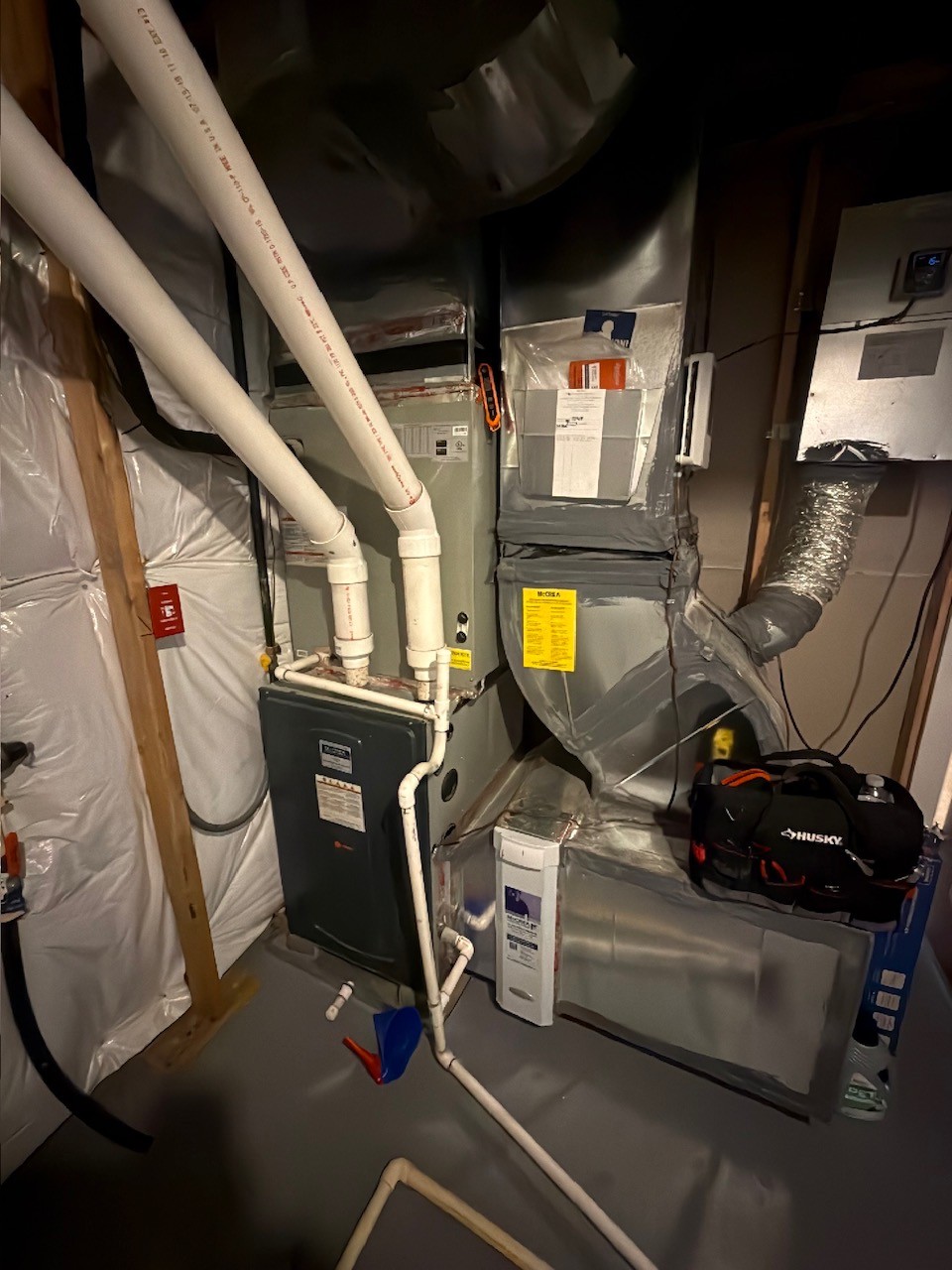
An inspection may also evaluate accessible portions of:
- Supply and return ductwork
- Registers and grilles
- Thermostats
- Condensate lines
- Exhaust and venting
- Refrigerant lines
- Electrical disconnects
- Air handlers
- Filters
- Combustion components
- Insulation
Problems with ductwork, airflow, drainage, or installation can affect how efficiently and effectively the system operates.
For example, a furnace or air conditioner may be relatively new, but poorly installed ductwork or restricted airflow can still create problems.
5. A Home Inspection Isn’t an HVAC Service Call
This is an important distinction for homebuyers.
A home inspector performs a visual, non-invasive inspection of the home’s accessible systems and components. An inspection is not intended to replace a complete evaluation or maintenance service performed by a qualified HVAC professional.
An inspector generally does not:
- Disassemble HVAC equipment
- Remove sealed panels
- Perform refrigerant testing
- Repair equipment
- Clean the system
- Perform a complete combustion analysis
- Guarantee the remaining life of the equipment
If an inspector identifies a significant concern, the report may recommend further evaluation by a qualified HVAC contractor.
That additional evaluation can be particularly valuable when the equipment is older, appears improperly installed, has significant deficiencies, or is a major concern for the buyer.
Don’t Forget About Maintenance
Even a properly functioning HVAC system needs regular maintenance.
Homeowners should follow the manufacturer’s maintenance recommendations and have their heating and cooling equipment professionally serviced when appropriate.
Simple maintenance, such as regularly replacing or cleaning the HVAC filter as recommended, can also help maintain proper airflow and system performance.
Keeping up with maintenance may help extend the life of the equipment and can make it easier to identify developing problems before they become expensive repairs.
What Should a Homebuyer Do If the HVAC System Is Old?
An older HVAC system doesn’t necessarily mean you should walk away from a home.
Instead, consider the bigger picture.
Ask questions such as:
- How old is the equipment?
- Has it been professionally maintained?
- Is there documentation of previous repairs?
- Is the system operating properly?
- Are there visible deficiencies?
- Is there evidence of water leakage?
- Are replacement parts still readily available?
- Would an HVAC contractor recommend additional evaluation?
If the inspection identifies concerns, obtaining an estimate or evaluation from an HVAC professional before closing can help you understand the potential cost.
Know What You’re Buying Before You Close
The HVAC system is one of the most expensive components in a home, and problems aren’t always obvious during a typical showing.
A professional home inspection can help identify visible deficiencies, provide information about the approximate age and condition of the equipment, and help you understand what may require attention now or in the future.
No home is perfect, and an inspection isn’t intended to make a home pass or fail. Instead, it provides information that allows you to make a more informed decision about one of the largest purchases you’ll make.
Schedule Your Home Inspection
At Trefoil Home Inspections, our goal is to provide homebuyers with a clear and unbiased understanding of the property they’re considering.
Our home inspections include an evaluation of accessible components of the home’s heating and cooling systems, along with the other major systems and components of the property.
We proudly serve homebuyers throughout Virginia, West Virginia, and Maryland, including the Winchester area and surrounding communities.
Buying a home? Contact Trefoil Home Inspections today to schedule your inspection and learn more about the condition of the home before you close.